

I think it’s fair to say a big challenge people have when it comes to dog equipment (collars, harnesses, and leashes) is that it’s not a one-size-fits-all approach. There are now a lot more options on the market than there were when I started in dog training over 16 years ago. I believe it’s important to assess what we have on our dog and to decide if it fits who they are as a dog at this time, if it fits our training philosophy as a dog parent, and if it’s the best option for our training challenges.
Yes, at Canine Country Academy, we recommend equipment that does not cause dog nor handler discomfort and is not used as a correction tool. I like to think of equipment as a safety tool more than a communication tool. I want the dog to connect with me regardless of the equipment on their body. I also don’t want them to be stressed having to wear it. Each dog will have their own feelings about equipment even if we’ve never used the equipment to correct undesirable behavior.
For example, Norby loves to wear his collar and harness. He will also wear dog clothes. He wants these things put on his body because it brings him positive emotions and likely he gets to go somewhere fun. Ahsoka, on the other hand, dislikes wearing anything on her body. She tolerates a collar and hates a harness unless we are hiking. It’s just who they are as individuals. I do my best to accommodate their preferences. It’s not all that different than people who prefer tight-fitting clothing vs. baggy.
I thought it might be helpful to list some of the equipment we use and recommend, in case you are looking for something different. In addition to the equipment being comfortable for the dog and handler, I also believe it should fit a certain way for safety and wellness, and it should weigh appropriately for the size dog that’s wearing it.
COLLARS
If you have a strong pulling dog, you are likely not going to rely on a collar as your primary equipment option. For those lucky to have either a non-puller or a dog who has learned pulling is undesirable, a collar can be enough. I recommend the collar be wide enough for the dog’s neck that if they were to pull, it would spread the pressure on the neck. For our 9-lb Toy Fox Terriers, they wear a 1″ collar. You’d think with a toy breed their collars would be narrow, but I don’t like the occasional pull on a small collar that could hurt their trachea. When out on walks, my dogs mostly have a harness to take all pressure off the neck, and they may have a collar on for ID or style. Just because we can put things around an animal’s neck doesn’t mean it’s the best option.
I also recommend thinking about a Martingale collar over a regular tag collar if you have a puller or a dog who likes to escape. It’s also a good alternative if you’ve been using something like a choke chain on your dog. The martingale feature is not designed to choke the dog; it’s there to limit them from pulling out of it. Yes, there is some pressure involved when they pull.
They make martigales that go over your dog’s head or that snap. I personally like the snap option because it’s easier to keep the same size and put on the dog.
Clip Martingale on Amazon – https://amzn.to/43mD9oA
Clip Martingale on Etsy – https://www.etsy.com/shop/pezpet?ref=shop_profile&listing_id=267180835
Non-Clip Martingale on Etsy – https://www.etsy.com/shop/PittyCoatsCollarCo?ref=shop_profile&listing_id=4344966639

HARNESSES
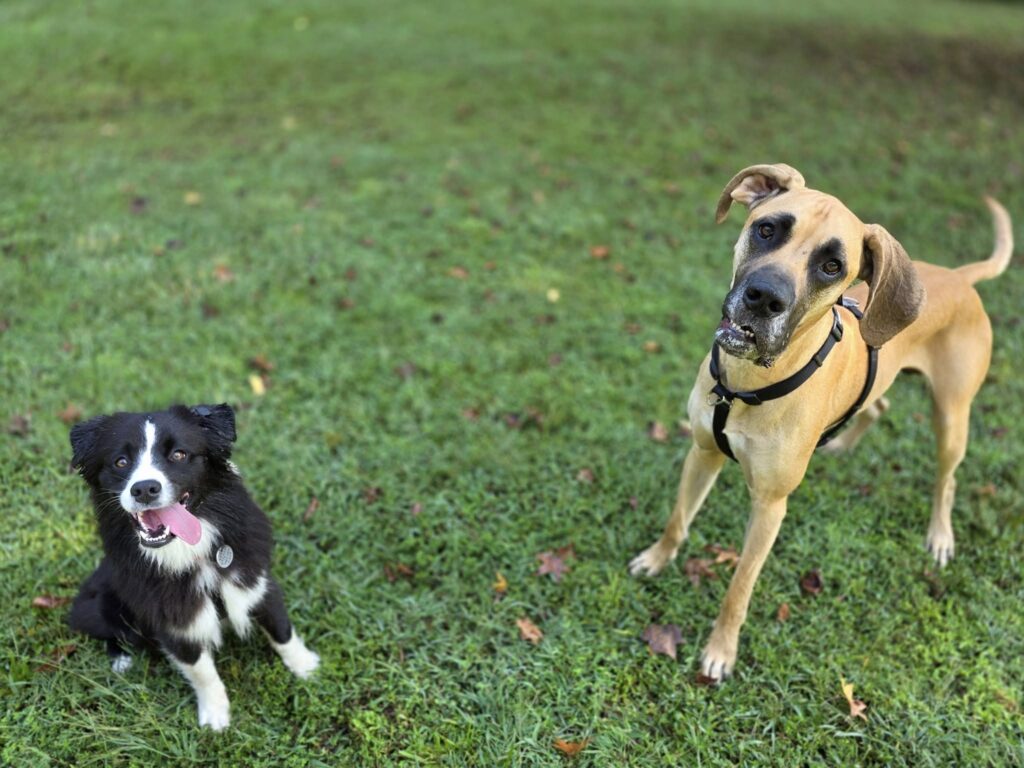
I do love a well-fitted harness! It makes my heart happy to see dogs on walks wearing a harness they can move freely. A myth you may have heard of is that a harness encourages pulling. That’s FALSE. There are some nice harnesses that allow you to clip the leash to the front or back of the harness, or both. If you have a strong puller, I highly recommend clipping to the front AND back for maximum leverage. These can be helpful as you work on leash manners. It’s also helpful for dogs with big emotions that may react when out and about.
When it comes to harnesses, you want to make sure the dog has full range of motion when moving. If the harness falls at the shoulder joint, it’s going to change their gait. You want the harness to come up higher like a V by their neck. It’s also important it’s not tucked up under their arm pit or cause chauffing. Every dog has a unique body style, and what works for one dog won’t necessarily work on your dog.
If you have a dog who might try to escape a harness, I recommend looking at one with a longer back piece and two snaps around their torso. This can limit them from learning or continuing to Houdini out of it.
Tiny Dog Step-In Harness – https://amzn.to/4eckMHK
Double Clip Harness (medium – XL dogs) – https://amzn.to/3Sbpxdg
Lightweight Double Clip (Toy size dogs) – https://amzn.to/43nIcoD
Escape Artist Harness – https://amzn.to/43GHFhX OR https://amzn.to/43GHFhX
LEASHES
The leash you use can be just as important as what your dog is wearing. We as handlers need to feel comfortable holding the dog’s leash. It should be appropriate to your hand size and not hurt when/if they pull. I’ve held many a student’s leash only to quickly swap to one of mine because the material in my hands hurts or is too wide. You may need a different leash for each caregiver in your house, too. If you aren’t comfortable holding the leash, how can you feel comfortable taking your dog out into the world?
What length you use will depend on your dog and the activity you are having them wear it. When I walk my own dogs, they are on 6-foot leashes so I can give them lots of room to explore, but can also reduce the length when I need them closer. When Hondo’s junior handler started doing all the things with him like walking, barn hunt, scent work, and mantrailing, I had to assess the best length for them as a team. She uses a 4-ft leash to walk him and a 6-ft leash for scent work.
Biothane – https://palominelines.com/
Leather – https://www.jjdog.com/dog-training-leather-leash/
Double Clip – https://amzn.to/4fy2ZgK
If you are unsure about equipment for your dog, please email us for suggestions or feedback.
Disclaimer:
This post may contain affiliate links. All opinions are our own. Per FTC guidelines, this website may be compensated by companies mentioned through affiliate programs. Any references to third-party products, rates, or websites are subject to change without notice. Please do the appropriate research before participating in any third-party offers.